留言
如果您对我们的产品感兴趣并想了解更多详情,请在此留言,我们会尽快回复您。

Operating a fire truck pump requires the correct sequence of valve operation, water supply connection, pump priming, PTO engagement, and pump start-up. Before operating the system, the operator should confirm that the fire truck is safely positioned and that all valves, pipelines, and control devices are in the correct positions.
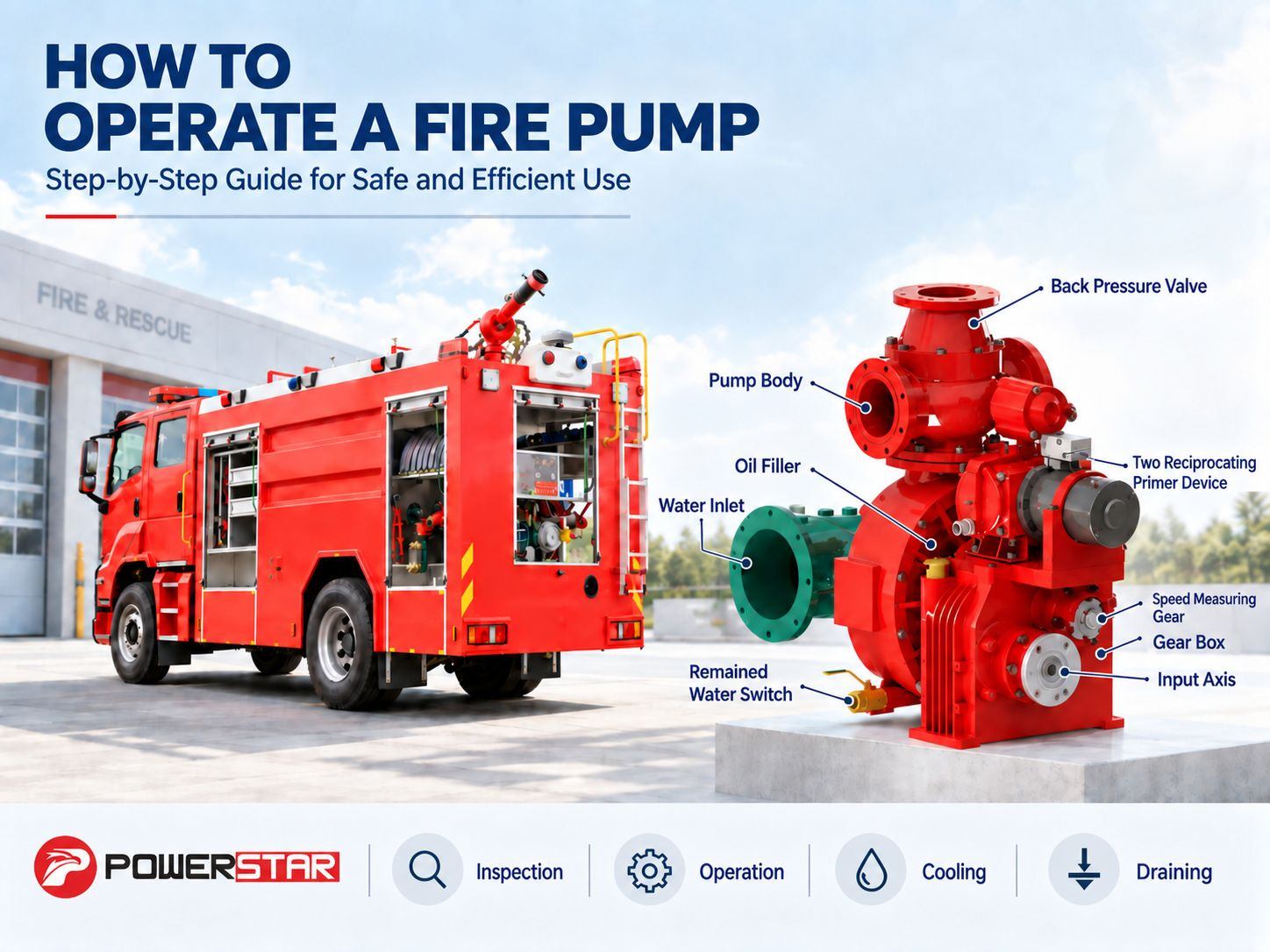
This guide describes the standard operating procedure for the fire pump system installed on the fire truck, covering pre-operation inspection, water intake, priming, pump operation, shutdown and post-operation drainage. The operator should follow each step carefully to ensure safe and reliable water supply.
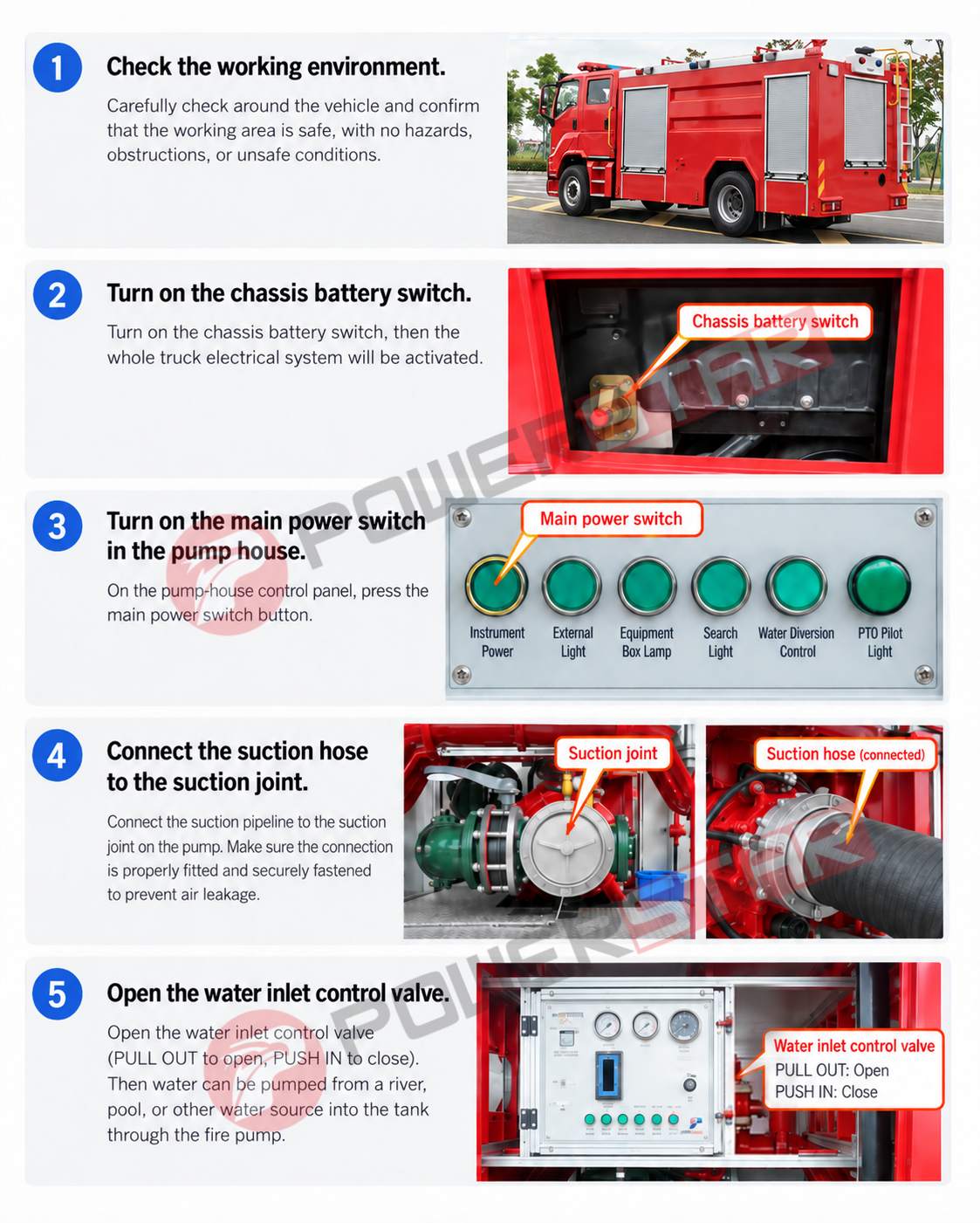
Check the operating environment and confirm that the vehicle is safely parked.
Open the chassis battery switch to activate the vehicle electrical system.
Turn on the main power switch from the pump control panel.
Connect the suction hose to the water inlet and ensure that the connection is tight.
Open the water inlet control valve.
Pull the valve handle outward to open the valve.
Push the handle inward to close the valve.
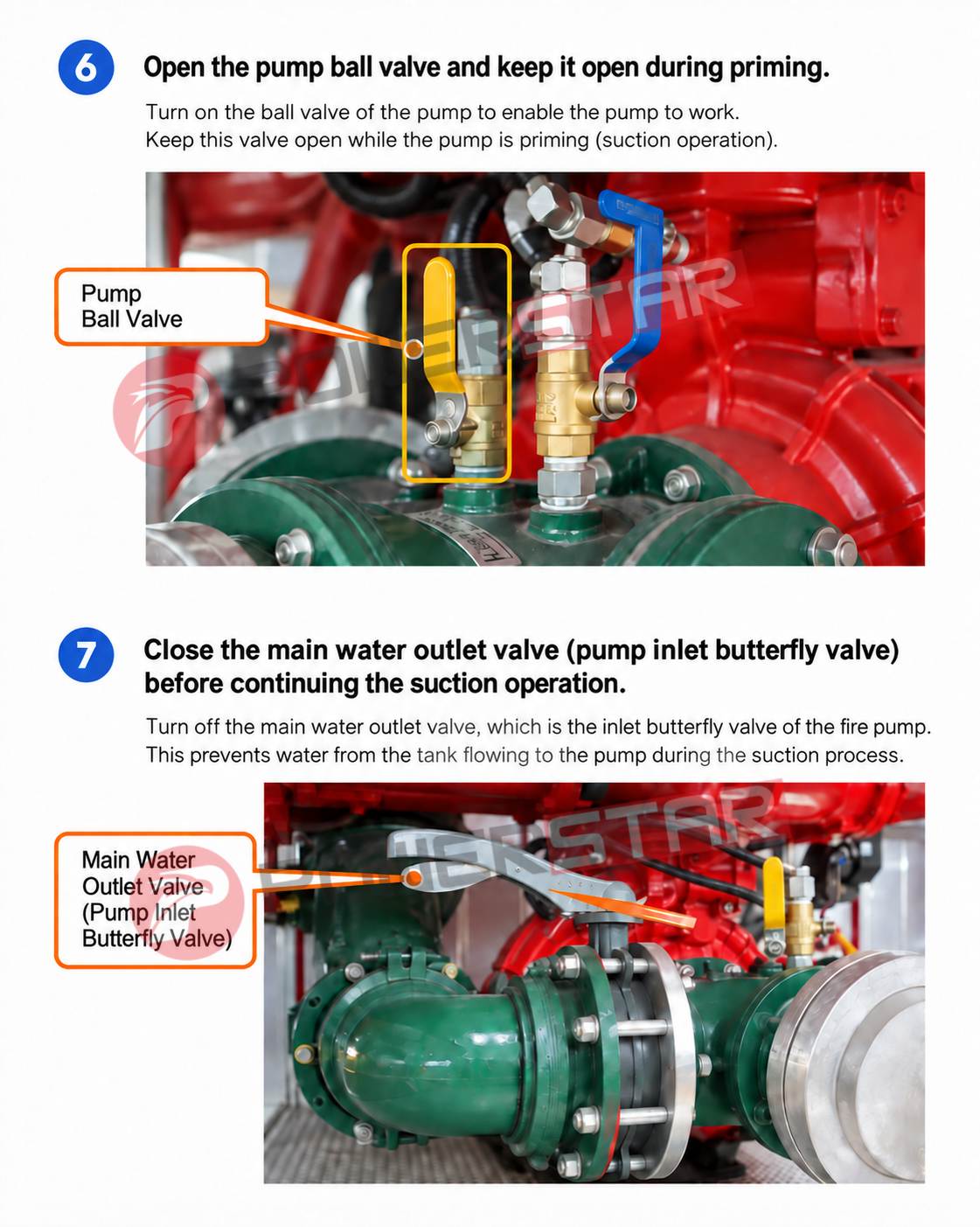
Open the pump ball valve and keep it open during priming.
Close the main water outlet valve (pump inlet butterfly valve) before continuing the suction operation.
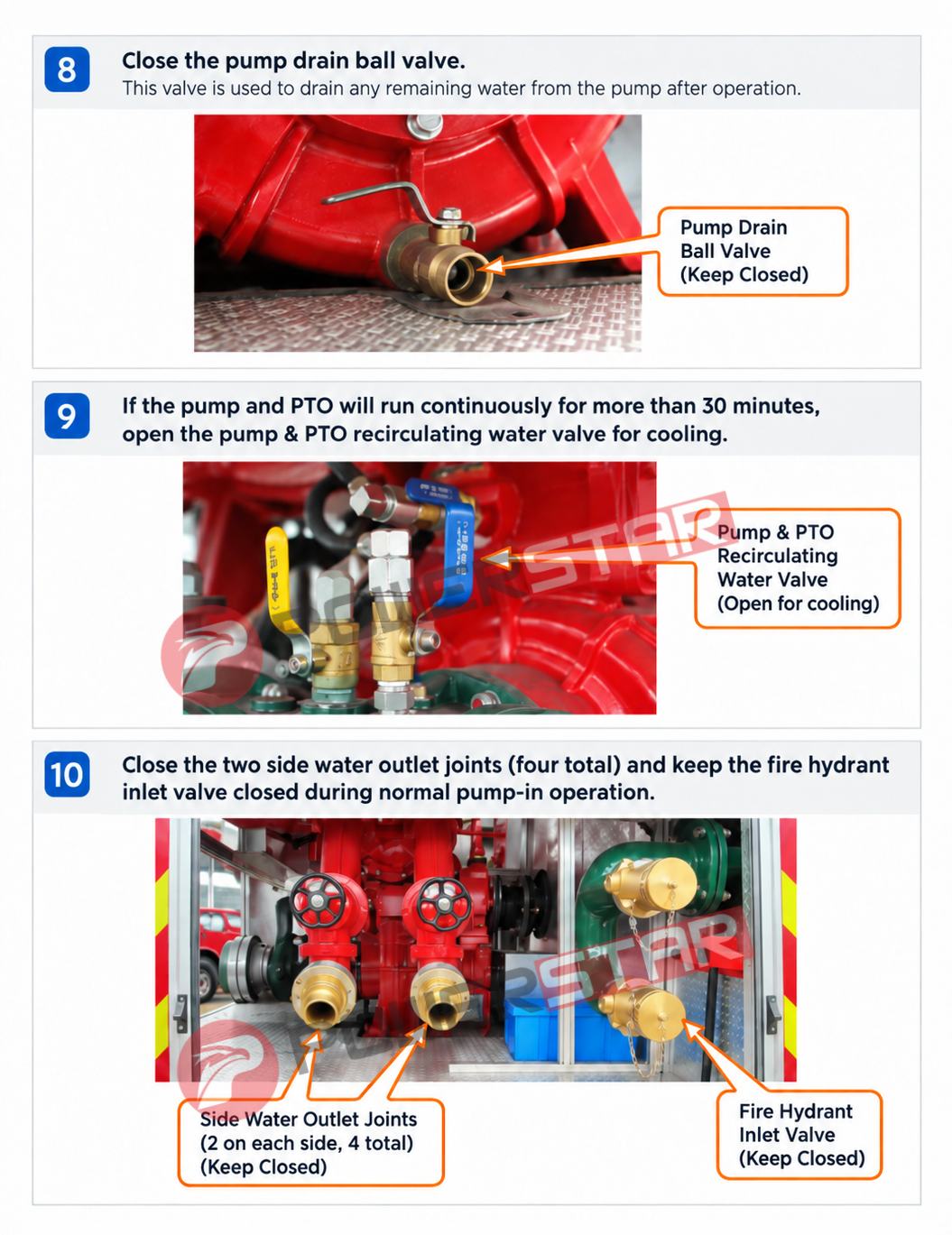
Close the pump drain ball valve.
If the pump and PTO will run continuously for more than 30 minutes, open the pump and PTO recirculating water valve for cooling.
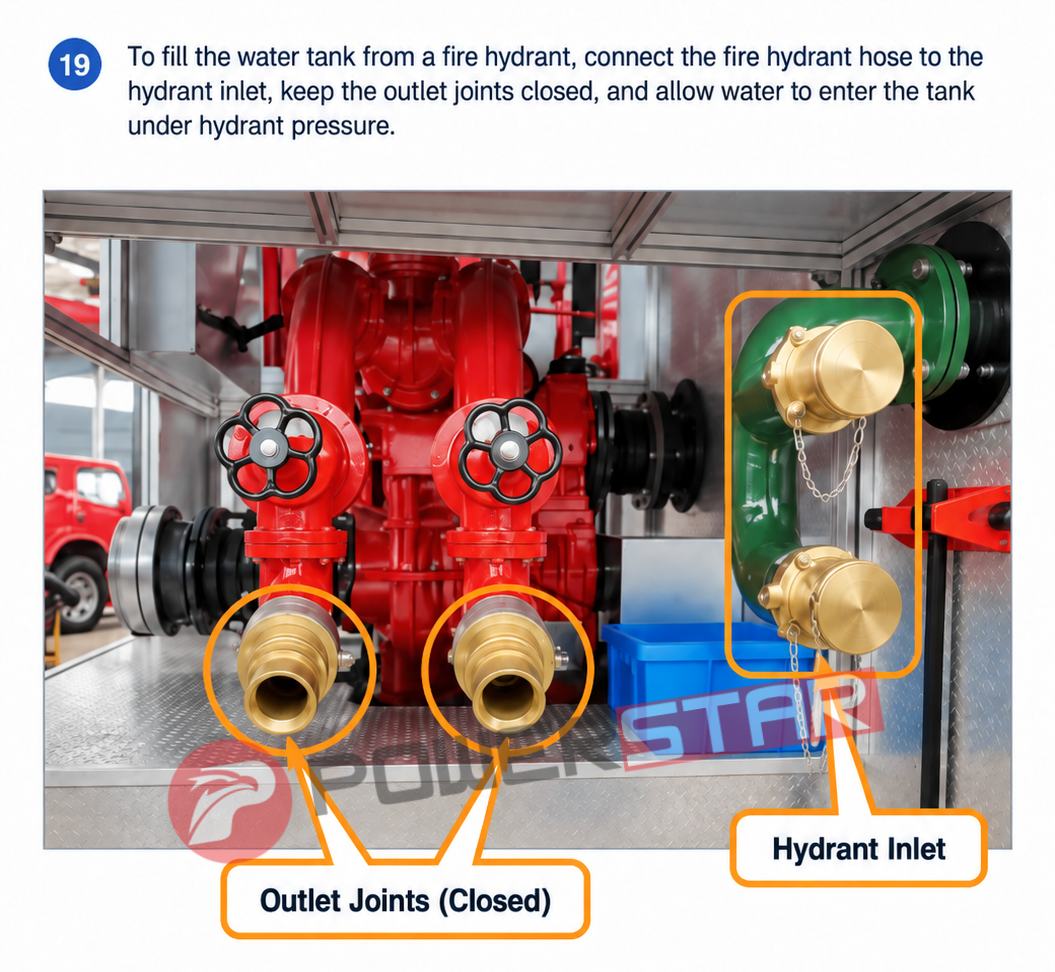
Close the two side water outlet joints (four total) and keep the fire hydrant inlet valve closed.
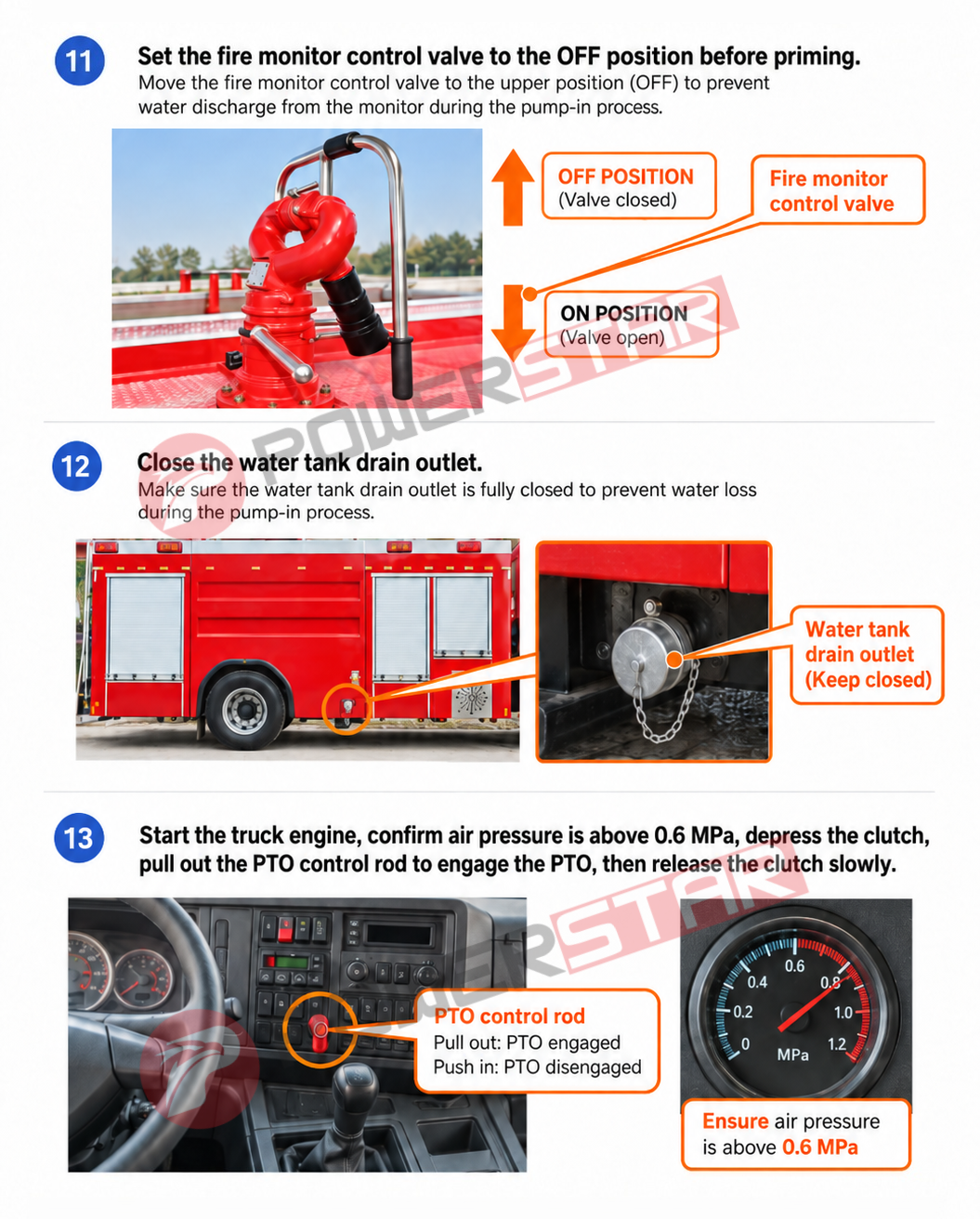
Set the fire monitor control valve to the OFF position.
Start the truck engine and confirm that air pressure is above 0.6 MPa.
Depress the clutch, pull out the PTO control rod to engage the PTO, then release the clutch slowly.
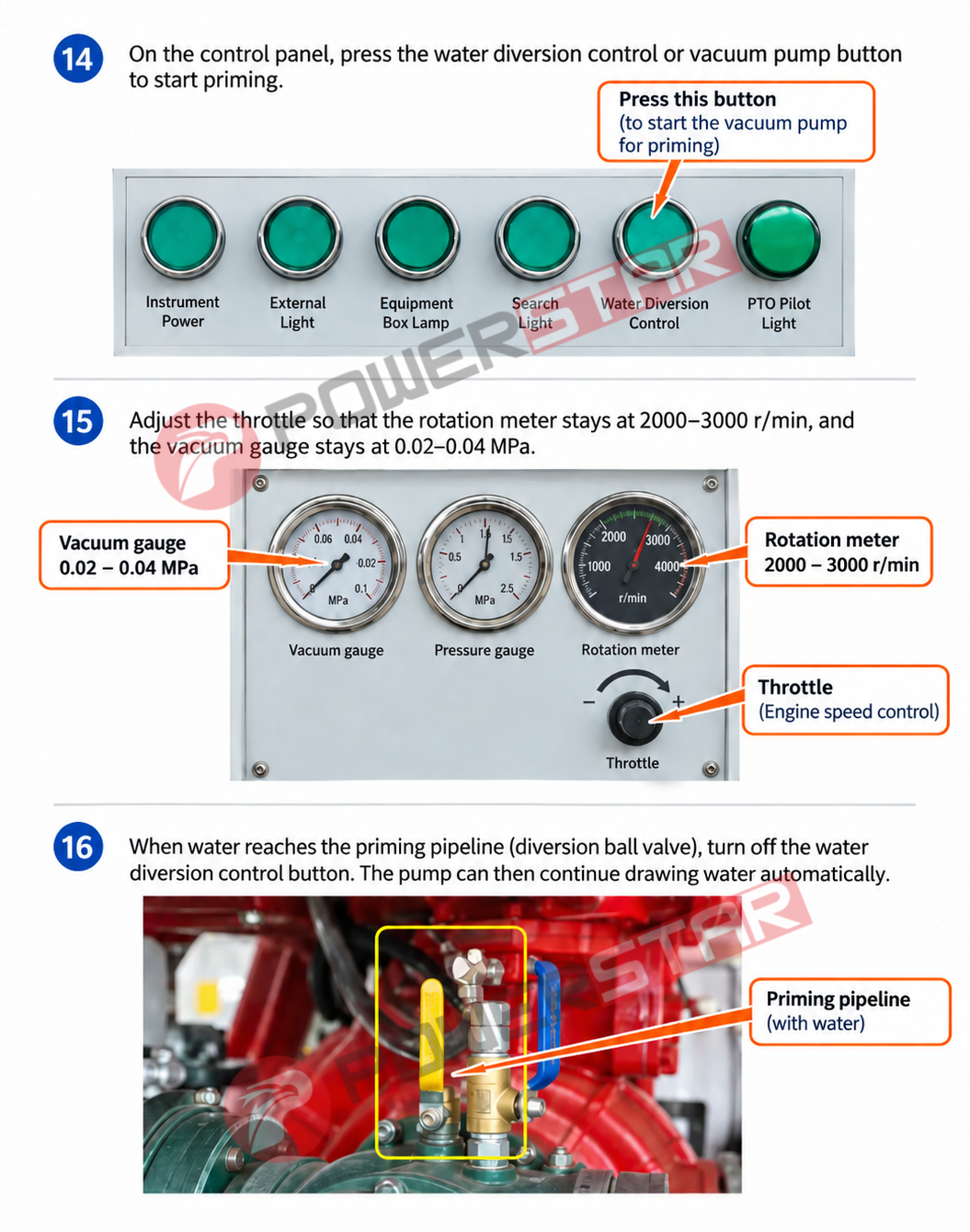
On the control panel, press the water diversion control or vacuum pump button to start priming.
Adjust the throttle so that the rotation meter stays at 2000–3000 r/min, and the vacuum gauge stays at 0.02–0.04 MPa.
When water reaches the priming pipeline, turn off the water diversion control button. The pump can then continue drawing water automatically.
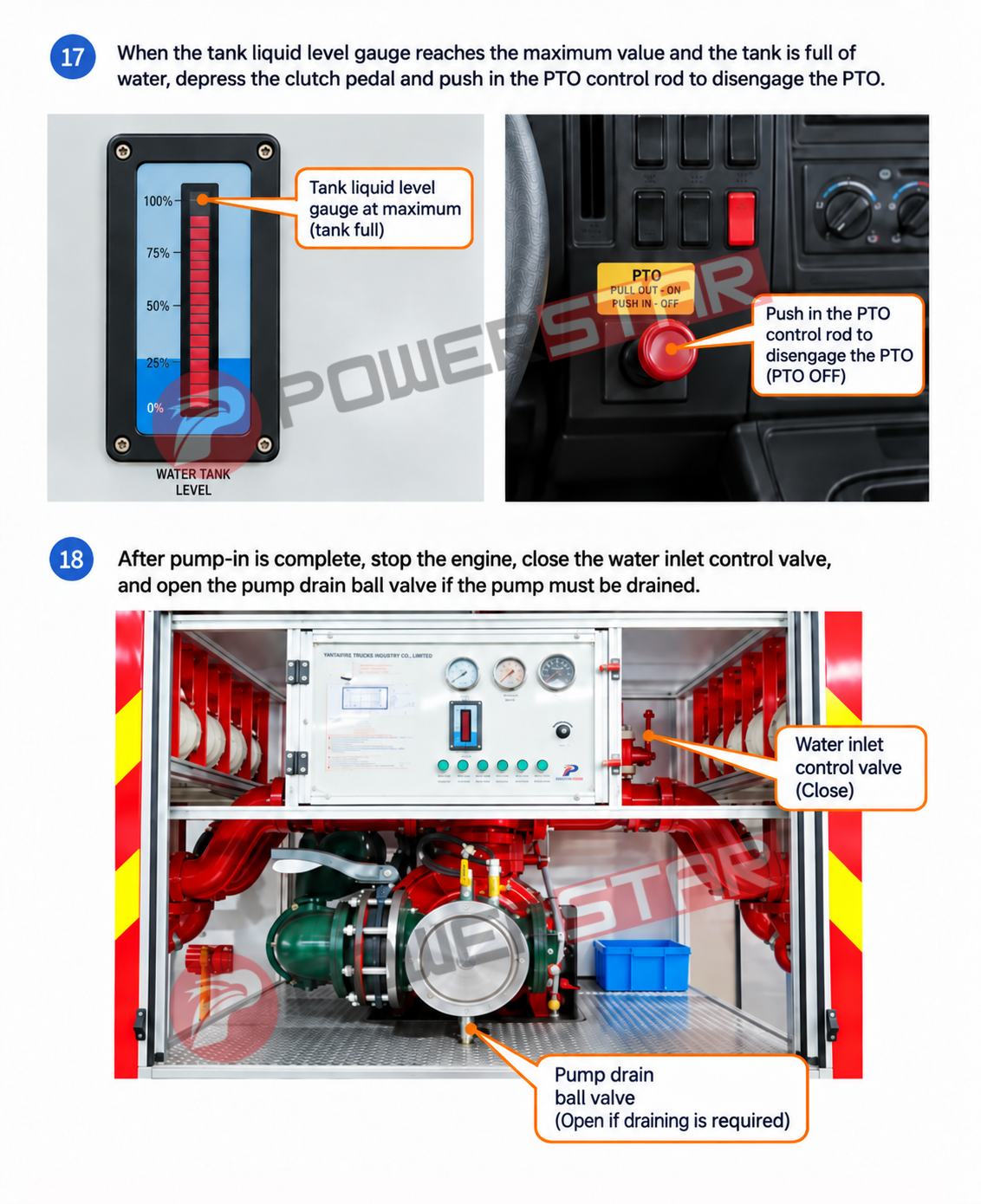
When the tank liquid level gauge reaches the maximum value and the tank is full of water, depress the clutch pedal and push in the PTO control rod to disengage the PTO.
After pump-in is complete, stop the engine, close the water inlet control valve, and open the pump drain ball valve if the pump must be drained.
To fill the water tank from a fire hydrant, connect the fire hydrant hose to the hydrant inlet, keep the outlet joints closed, and allow water to enter the tank under hydrant pressure.
| Problem | Possible Cause | Recommended Check |
| Pump fails to prime | Air leak in suction hose or connections | Check all fittings; reseal or tighten |
| Vacuum gauge reads zero | Incorrect valve position or leaking seal | Verify valve positions; inspect gaskets |
| Low water flow | Clogged strainer or restricted suction | Clean strainer; check suction hose |
| Pump loses prime | Suction hose lifted out of water | Submerge strainer deeper below surface |
| Pump overheating | Running dry or low flow for extended period | Increase flow; check for air in system |
Never operate the fire pump without an adequate water supply.
Monitor the vacuum gauge and rotation meter continuously during priming.
Do not exceed the pressure ratings of hoses, couplings, or the building standpipe system.
Drain the pump after operation to prevent freezing in cold weather and reduce corrosion during storage.


您可能对以下信息感兴趣
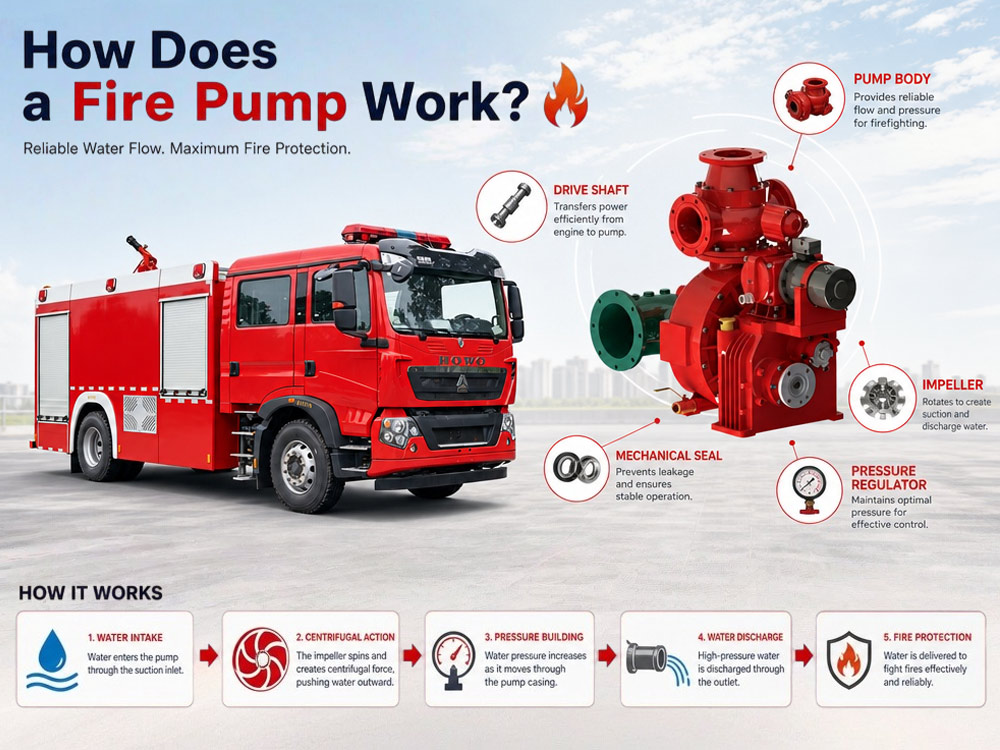
消防泵是每辆消防车供水系统的核心。无论是应对建筑火灾、工业事故、机场事件还是野外灭火行动,消防泵在一辆 消防车上负责向水带、消防炮和泡沫系统输送高压水。其离心叶轮设计和取力器驱动系统确保稳定压力和高流量,直接将灭火效率提高超过40%,同时将响应时间缩短3倍。它可以被称为消防作业中的隐形守护者,也是现代应急响应的技术基石。 了解消防泵的工作方式,包括其工作原理、主要部件、水流过程、压力产生机制和应用领域。了解消防车泵如何为灭火提供可靠供水,以及如何为您的消防车辆选择合适的泵。今天让我们一起来了解它。 » I. 首先,我们需要了解消防泵系统的三个关键部件: 1. 叶轮:使水进入并通过离心力将水甩向外部的旋转部件。通常由青铜、不锈钢或铸铁制成。 2. 泵壳:容纳叶轮并引导水流的外壳。设计用于将速度转换为压力。 3. 取力器(PTO):将卡车变速箱的发动机动力传递至消防泵的机械连接装置。 » II. 了解关键部件后,消防泵的核心工作原理如下: 1. 动力通过取力器从发动机传递 卡车发动机驱动取力器,取力器连接泵轴。当操作员接合取力器时,发动机动力会被重新导向,使泵叶轮高速旋转。 2. 叶轮开始旋转 叶轮以1,500–2,500 RPM的速度旋转,通过吸水口将水吸入泵内。旋转的叶轮叶片在中心区域形成低压区,从车载水箱、消火栓或天然水源中吸入水。 3. 离心力提高水压 随着叶轮旋转,它通过离心力将水甩向外侧。水从叶轮中心移动到外缘时,速度不断增加。随后泵壳将这种速度转换为压力,迫使高压水从出水口排出。 4. 高压水从出水口排出 加压后的水(通常为0.8–1.2 MPa)通过出水口排出,并输送至消防水带、消防炮或泡沫比例混合系统,用于灭火作业。 » III. 消防泵从哪里获取水? 消防泵可以从三个来源抽水: 车载水箱:初期进攻的主要水源。典型容量:2,000–12,000升。到达现场后可立即提供供水。 消防栓:通过供水水带连接。为持续作业提供连续供水。消防栓压力有助于泵保持流量。 天然水源(吸水作业):湖泊、河流、池塘或游泳池。泵使用引水系统在吸水前排出吸水管中的空气。海平面的最大理论吸程约为10米(33英尺)。有效吸水深度通常为7–8米。 吸水过程: 将刚性吸水管连接至泵入口 将滤网浸入水面以下至少2–3英尺 启动引水装置,排出水管和泵内的空气 形成真空,大气压力推动水上升 水进入泵内,然后离心泵对其加压 » IV. 消防泵的系统组成和核心功能: 吸水入口:水进入泵的位置。典型尺寸:DN100–DN150。配备滤网,防止杂物进入。 排水出口:加压水流出的地方。典型尺寸:DN65–DN80(标准出口)。配备阀门,用于控制流向水带或水炮的水流。多个出口可支持同时使用。 叶轮:产生水流的旋转部件。将机械能转换为动能。通常由青铜(耐腐蚀)、不锈钢(坚固耐用、使用寿命长)或铸铁(适用于标准应用,成本效益高)制成。 泵壳:引导水流的外壳。设计用于将速度转换为压力。常见设计:蜗壳式泵壳(螺旋形结构,保证水流平稳)和导流壳式泵壳(具有更高效率)。 引水系统:在吸水作业前排出泵和吸水管中的空气。类型包括: 真空引水器:采用旋转叶片式或活塞式设计。快速且高效。现代消防车中最常见。 排气引水器:利用发动机排气产生真空。结构简单,但效率较低。 电动引水器:由电机驱动。无需泵旋转即可完成引水。可保护机械密封,避免因干转造成损坏。 压力安全阀:防止压力过高。当压力超过设定值时开启。保护水带、水泵和消防员。 压力调节器:自动保持设定压力。通过调节发动机转速来补偿流量变化。降低操作人员工作负担。可提供压力模式(保持预设压力)和转速模式(保持预设发动机转速)。 PTO(动力输出装置):连接发动机和水泵的装置。将发动机动力传递给水泵。消防车通常采用夹层式PTO(安装在发动机和变速箱之间),以实现全部动力输出。 » 五、按应用选择水泵: 1. 消防泵类型比较 水泵类型 优势 典型应用 单级离心泵 流量大、设计简单、成本效益高 市政消防车 两级消防泵 压力更高,可切换模式 高层建筑灭火、长距离铺设水带 中置消防泵 平衡性更好,运行稳定 标准消防车辆 后置消防泵 维护更容易,冷却效果更好 机场和工业消防车 2. 消防泵与普通水泵比较 比较项目 消防泵 标准水泵 工作压力 高(0.8–2.5 MPa) 较低(0.2–0.6 MPa) 流量 高(1,200–6,000 L/min) 中等(500–2,000 L/min) 连续运行 是(设计用于长时间使用) 取决于型号 由动力输出轴驱动 是 通常不是 消防标准符合性 是(通过 NFPA、EN、GB 认证) 否 应用领域 消防与救援 工业、农业、生活供水 3. 应用场景推荐 应用场景 推荐水泵 原因 市政消防 单级泵(1,200–3,000 L/min) 性价比高,能够满足大多数火灾需求 高层建筑 两级泵(2,000–4,000 L/min) 更高压力,适用于垂直提升 石化工厂 两级泵(3,000–6,000 L/min) 高流量和压力,适用于工业火灾 机场失事救援 后置式(4,000–6,000 L/min) 高流量,维护更方便 野外消防 单级泵(1,000–2,000 L/min) 轻便、可移动 » VI.消防泵如何建立压力? 消防泵通过离心力建立压力。当叶轮旋转时,会将水吸入中心,并以高速向外甩出。泵壳通过降低水流速度,将这种高速水流转化为压力。 影响压力的因素: 叶轮转速:转速越快 = 压力越高。叶轮转速与发动机转速(RPM)成正比。 发动机转速(RPM):发动机转速越高 = 叶轮转速越快 = 压力越高。操作员通过调节发动机油门或使用压力调节器来控制压力。 泵的设计:两级泵通过将两个叶轮串联使用,可以实现比单级泵更高的压力。 管径:管径越小 = 压力越高但流量越低。管径越大 = 压力越低但流量越高。操作员必须根据消防任务在压力和流量之间进行平衡。 水源:充足的供水对于维持压力至关重要。供水不足会导致压力下降。 » VII.常见消防泵问题及解决方案 1. 泵无法引水 可能原因:吸水软管漏气、滤网堵塞、引水装置无法工作。 解决方案:检查并拧紧所有吸水软管连接处;清洁滤网;检查引水系统(真空泵或电动引水装置),如有需要进行维修。 2. 水压低 可能原因:滤网堵塞、发动机转速不足、叶轮磨损、系统内有空气。 解决方案:清洁滤网;提高发动机转速;检查叶轮磨损情况,如有需要进行更换;检查是否漏气并重新引水。 3. 气蚀 形成原因:当泵无法获得足够的水量时会发生气蚀。叶轮会在水和蒸汽气泡的混合物中旋转。当这些气泡破裂时,会产生冲击波,损坏叶轮并导致严重的压力波动。 避免方法:切勿让泵的运行速度超过供水能力;监测进水压力;如果真空度过高,应降低泵速;确保滤网未堵塞。 4. 漏水 检查项目:检查所有密封件和垫片;检查泵壳是否有裂纹;确保排水阀关闭;立即更换磨损的密封件。 5. 过热 原因:泵干转、冷却不足、无水流情况下长时间运行。 维护提示:切勿在无水情况下运行泵;确保冷却管路畅通;运行间隔期间让泵冷却;定期检查热泄压阀。 » VIII. 实际案例研究:市政消防部门泵系统升级 背景: 某市...
细节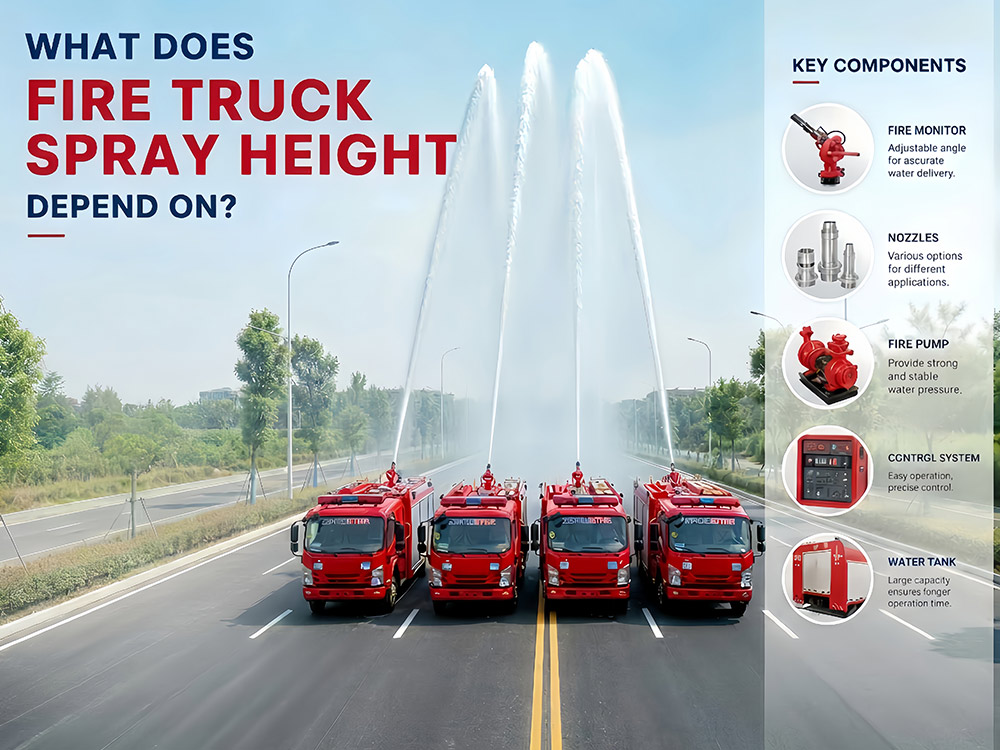
消防车泵浦和喷射系统是消防作业的核心。它充当消防车的“强大手臂”。通过将发动机动力转换为压力(范围为0.8至1.4 MPa),它可将灭火剂输送至最高85米的高度——无论是密集城市中心的高层建筑火灾,还是工业区的石化储罐火灾,消防车都依靠该系统实现有效灭火。 哪些因素会影响消防车的喷射高度?泵压力、流量和消防炮如何协同工作?这些都是许多客户关注的重点。今天我们就来了解一下。 » 一、决定喷射高度的三个关键组成部分 1. 消防泵系统: 消防车的心脏。由取力器驱动的离心泵。常见压力等级:0.8 MPa、1.0 MPa、1.2 MPa、1.4 MPa。流量范围为2,000至5,000+ L/min。 2. 消防炮: 灭火剂离开消防车前的最后一个部件。可分为水炮、泡沫炮和两用炮。PL系列(PL48)的流量最高可达4,000 L/min,喷射高度可达70多米。 3. 输送系统: 将灭火剂从泵输送至消防炮的管路、水带和喷嘴。水带直径、长度以及喷嘴类型都会影响最终喷射高度。 » 二、决定喷射高度的核心因素 1.1. 泵压力 消防车泵压力是消防泵产生的推动力,用于使灭火剂通过水带并从喷嘴或消防炮排出。它是影响流量和喷射距离的主要因素。更高的压力会使消防炮出口处的流速更高,从而直接增加喷射高度。其关系由公式H ≈ P/(ρg)决定,其中每增加0.1 MPa,理论高度约增加10米——但实际中的损失会降低这一数值。 在实际消防作业中,适用范围如下: 泵压力 典型喷射高度 0.8 MPa 35–45米 1.0 MPa 45–55米 1.2 MPa 55–70米 1.4 MPa 70–85米 1.2. 消防泵的工作原理: 消防泵通常是由消防车发动机通过取力器(PTO)驱动的离心泵。随着叶轮旋转,它吸入灭火剂,并利用离心力将其甩向外部,产生压力,推动灭火剂通过排出系统。 额定压力与工作压力: 术语 定义 额定压力 泵在设计条件下能够持续承受的最大压力 工作压力 消防作业期间实际使用的压力,通常低于额定压力,以保留安全余量 2. 流量(L/min) 充足的流量与压力同样重要。高压力配合低流量无法输送足够的灭火剂来抑制火灾。泵系统必须同时保持压力和流量。 流量与喷射高度的关系: 2,000 L/min → 适用于城市火灾的有效灭火 3,000 L/min → 适用于工业园区 4,000 L/min → 石化设施所需 5,000+ L/min → 机场消防救援所必需 3. 消防炮设计 消防炮的内部流道、出口直径和类型会直接影响喷射高度。 消防炮类型比较: 水炮:最高高度,直流流道 泡沫炮:由于空气吸入湍流,高度略低(低5–10%) 两用消防炮:中等(介于水炮和泡沫炮之间的折中方案) 4. 灭火剂类型 水和泡沫具有不同的密度。泡沫溶液的密度约比水高5-10%,这会在相同压力下略微降低喷射高度。在选择泡沫作业设备时,应考虑这一因素。 5. 摩擦损失 当灭火剂流经软管和管道时,摩擦会降低消防炮处的压力。较长的软管和较小的直径会增加损失。 摩擦损失因素: 软管长度:越长 = 损失越大 软管直径:越小 = 损失越大 管件和弯头:每个都会增加阻力 »III. 消防车选型指南 为了向客户提供最佳消防解决方案,FIRE TRUCKS 会根据应用 要求选择最合适的系统: 1. 不同压力下的喷射高度比较 泵压力 流量 喷射高度 推荐应用 0.8 MPa 2,000 L/min 35–45 m 市政消防 1.0 MPa 3,000 L/min 45–55 m 工业园区 1.2 MPa 4,000 L/min 55–70 m 石化设施 1.4 MPa 5,000+ L/min 70–85 米 机场消防 2. 消防炮选择指南 应用场景 推荐消防炮类型 原因 市政消防 水炮 最高喷射高度,操作简单 炼油厂/化工厂 泡沫炮或双用途消防炮 可处理易燃液体火灾 机场坠机救援 泡沫炮(大容量) 需要大量泡沫 混合火灾风险 双用途消防炮 兼具水和泡沫应用的灵活性 3. 影响喷射高度的关键因素 因素 影响 优化方法 泵压 成正比 根据应用场景选择合适压力 流量 维持灭火效果 平衡压力与流量 消防炮设计 最高可有 10% 的变化 根据应用场景匹配消防炮类型 灭火剂类型 泡沫会略微降低高度 考虑密度差异 摩擦损失 降低有效压力 使用更短/更大直径的软管 高度增加 消耗压力 为高度增加额外压力 风速 降低有效高度 将卡车停在上风向 » IV. 真实案例研究:石化储罐火灾 案例背景: 某工业区内一家石化储存设施发生大规模火灾。火灾涉及一个直径50米的浮顶原油储罐。由于储罐高度和辐射热区域的影响,地面消防水带无法到达火源。 消防车配置: 8×4泡沫消防车 额定压力为1.2 MPa / 4,000 L/min的泵系统 PL48泡沫/水两用炮 实际性能: 测得喷射高度:约62米 有效覆盖范围:直径约80米的储罐区域 泡沫覆盖层在8分钟内成功抑制火灾 关键经验: 对于大型储罐火灾,低于1.0 MPa的压力通常不足以将泡沫输送到所需距离。足够的压力、高流量以及正确选择的消防炮相结合,是实现有效灭火的关键。 » V. 常见误解 误解1:压力越高越好 实际情况:较高压力会增加能耗、设备成本和维护复杂度。过高压力还可能损坏水带和喷嘴。目标是满足工作需求的适当压力,而不是最大压力。 误解2:喷射高度等于灭火能力 实际情况:流量通常比高度更为关键。低流量的高射流可能无法输送足够的灭火剂来抑制火灾。压力和流量的综合效果才是关键。 误解3:可以忽略摩擦损失 实际情况:在长距离铺设水带时,摩擦损失可能消耗泵压力的20-30%。正确计算摩擦损失对于确保喷嘴处具有足够压力至关重要。 误解4:消防炮没有影响 实际情况:高压泵连接到设计不佳的消防炮时,无法达到最大喷射高度。消防炮内部流道、出口直径和类型都会影响最终性能。使消防炮与泵相匹配,与选择泵本身同样重要。 » VI. 常见问题 问:消防车上最常见的泵压力是多少? 答:大多数消防车设计的泵压力范围为0.8至1.2 MPa,其中1.0 MPa是最常见的标准。 问:1.0 MPa泵可以喷射多高? 答:在标准条件下,使用中型到大型消防炮时,1.0 MPa泵可以达到45至55米的喷射高度。 问:为什么高层火灾需要更高的泵压力? 答:高层火灾需要额外压力来克服高度增加带来的压力损失(高度每增加1.0米约需要0.01 MPa)以及垂直水带中的摩擦损失。 问:泡沫炮能达到与水炮相同的喷射高度吗? 答:通常情况下,由于泡沫监视器的进气设计会产生湍流,并且泡沫溶液密度更高,在相同压力下,泡沫监视器达到的高度会略低于水监视器(低约5-10%)。 问:影响喷射高度最重要的因素是什么? 答:没有单一因素能够决定喷射高度。泵压力、流量、监视器设计、喷嘴类型以及环境条件共同发挥作用。一个均衡设计的系统比仅在某一方面表现出色的系统更有效。 问:监视器本身会影响喷射高度吗? 答:会。监视器的内部流道、出口直径以及类型(水、泡沫或双用途)都会直接影响喷射高度。设计良好的监视器能够最大限度地利用泵输送的能量。 » VII. 关键要点: 喷射高度取决于多个因...
细节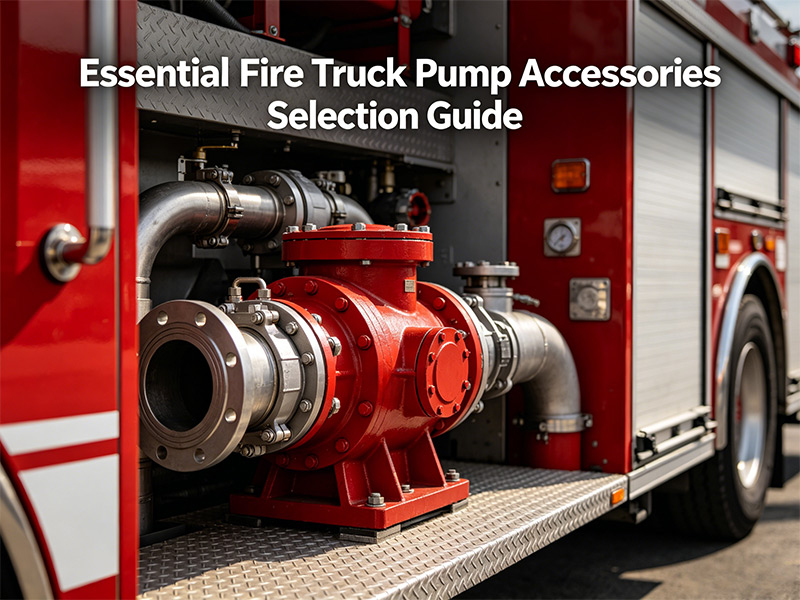
消防车泵系统的可靠性取决于其组件的质量。从水源取水到高压排水,每个附件都发挥着关键作用。本指南涵盖消防车 五大关键附件类别:引水装置、球阀、截止阀、泡沫比例混合器和液压控制系统。 了解这些组件有助于消防员维护设备,并针对特定应用选择合适的附件。 I. 引水装置系列(真空引水设备) 当没有可用消防栓时,引水装置对于从湖泊、河流或其他静态水源取水至关重要。它们会排出泵和吸水管中的空气,使大气压力将水推入泵内。 产品概览 产品 最大真空度 电压 功率 适用泵尺寸 双活塞引水装置 >85kPa 24V - 低于100 L/s 电动双活塞引水装置 >85kPa 24V 2.1KW 低于100 L/s 四活塞引水装置 >85kPa 24V - 高于100 L/s 电动四活塞引水装置 >85kPa 24V 2.1KW 高于100 L/s 关键特点:电动引水装置 电动引水装置具有显著优势——无需泵旋转即可完成引水。这可以保护机械密封件免受干转运行损坏。当标准引水装置需要泵旋转时,电动版本可独立工作,从而延长密封件寿命。 II. 球阀系列(流量控制) 球阀控制水流通过软管和排水出口。它们设计用于通过简单的90°旋转实现快速开关操作。 不锈钢球阀 型号 材料 额定压力 螺纹 操作方式 FQS65/2.5 阀体和球体:304不锈钢;密封件:PTFE 2.5 MPa G2-1/2" 手轮 / 手柄 FQS80/2.5 阀体和球体:304不锈钢;密封件:PTFE 2.5 MPa G3" 手轮 / 手柄 铝合金球阀(重量更轻) 型号 材料 额定压力 螺纹 操作方式 FQS65/2.5 阀体:A356.2;球体:304;密封件:PTFE 2.5 MPa G2.5" 手轮 / 手柄 FQS80/1.6 阀体:A356.2;球体:304;密封件:PTFE 1.6 MPa G3" 手轮 / 手柄 FQS65/2.5 方形 阀体:A356.2;球体:304;密封件:PTFE 2.5 MPa - 气动 / 手柄 Ⅲ. 截止阀系列(压力与流量调节) 与设计用于开关操作的球阀不同,截止阀可实现对流量和压力的精确控制。它们非常适合需要逐步调节的应用场景。 型号 材料 额定压力 螺纹 操作方式 DN65/2.5 阀体:A356.2;阀杆:H62;密封件:NBR 2.5 MPa G2.5" 手轮 DN80/2.5 阀体:A356.2;阀杆:H62;密封件:NBR 2.5 MPa G3" 手轮 何时使用截止阀 在需要精细压力控制的出口位置使用截止阀,例如为另一辆车辆的储罐加注或以特定压力向软管管线供液时。 IV. 泡沫比例混合器系列(泡沫混合设备) 泡沫比例混合器以精确比例将泡沫浓缩液与水混合。这对于扑灭B类(可燃液体)火灾至关重要,因为单独使用水无法有效灭火。 手动式/标准型比例混合器 型号 材料 入口压力 流量范围 混合比例 PH32-64 阀体:A356.2 0.6-1.4 MPa 4-64 L/s 6% PHZ100 阀体:A356.2 1.0 MPa 60-100 L/s 3%、6%、8% 半自动比例混合器 型号 压力 流量范å
细节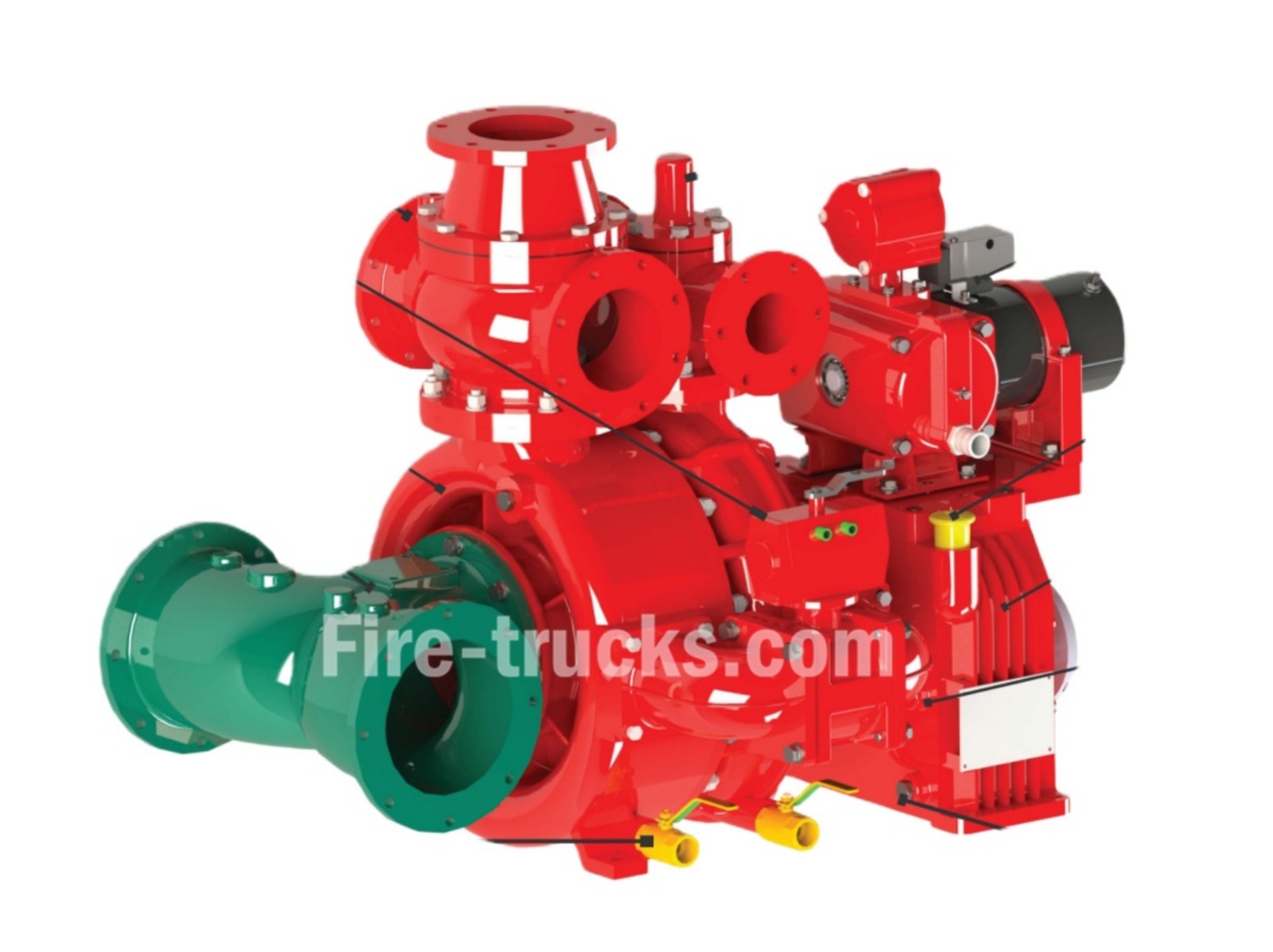
作为一名专业的雄臻 消防泵制造商 在中国, 动力之星卡车 公司拥有自主品牌“雄震”系列产品,包括低压消防泵、中低压消防泵、高低压车载消防泵以及消防炮、泡沫比例混合器等配套设备。其消防泵采用铝合金、不锈钢等新型材料,配备电磁离合器自动脱离装置和止回阀,性能优异,操作简便,维护方便。公司产品已通过国家消防器材质量监督检验中心型式试验、CCC认证和ISO9001质量管理体系认证。 雄镇消防泵主要包括以下型号:CB10/20-XZ, CB10/30-XZ CB10/40-XZ CB10/60-XZ ,CB10/80-XZ,CB10/100-XZ,CB20.10/15.30-XZ,CB20.10/20.40-XZ,CB20.10/30.60-XZ 等。 消防车用 CB10/20-XZ 型消防泵 消防车用 CB10/30-XZ 型消防泵 中国消防车用CB10/40-XZ型消防泵 消防救援车用CB10-60型消防泵 CB10/80-XZ型消防车用应急消防泵 消防车用CB10/100-XZ型消防泵 雄镇消防泵系统 CB10/100-XZ 规格 雄镇CB系列消防泵厂家 CB10/150型消防泵组规格 雄镇工厂 CB10/160-XZ 消防泵系统 CB10/170-XZ型应急消防泵规格 Powerstar卡车拥有雄厚的技术实力,持有四项专利,并采用CAD绘图和CNC机床等先进生产设备,以确保产品高合格率和客户满意度。其产品主要面向消防车改装厂和消防队。 CB20.10 20.40 消防泵详细规格 雄振工厂生产的CB20.10 30.60-XZ型消防泵 CB20/15-XZ系列消防泵 CB20/20-XZ系列应急消防泵 CB20 25 型消防泵安装详情 以下是您的雄震设备的保养计划表。 消防泵 按周、月、季度和年分类,方便查阅: 01、Powersar消防泵日常检查: 检查稳压泵的启停压力和频率。 检查柴油机消防泵的启动电池电量。 检查水源控制阀和报警阀组件的外观是否有损坏。 02,Powersar消防泵 每周检查: 对自动启动式消防泵进行试运行。 检查柴油消防泵的燃油油位。 03,Powersar消防泵 月度检查: 测试手动启动电机 消防泵 以及柴油发动机消防泵。 检查消防水箱和高架消防水箱的水位。 检查压力罐的气压、水位和有效容积。 检查所有系统控制阀的密封件和链条的完整性。 检查止回阀的压差。 04,Powersar消防泵 季度检查: 检查市政供水管网的压力和流量。 检查室外阀井中控制阀的开启状态。 检查室内外消防栓的外观和泄漏情况。 对消防泵进行流量和压力测试。 05,Powersar消防泵 年度检查: 测试消防泵连接处减压阀的流量和压力。 检查储水设备的结构材料是否完好。 对每个室外消防栓进行出水测试。 进行系统连接测试,以确保消防栓系统正常运行。 严格遵守此维护周期将有效确保消防泵始终处于良好的工作状态。 如果您对我们的消防泵感兴趣,请联系我们,我们保证质量最优,价格最优惠。
细节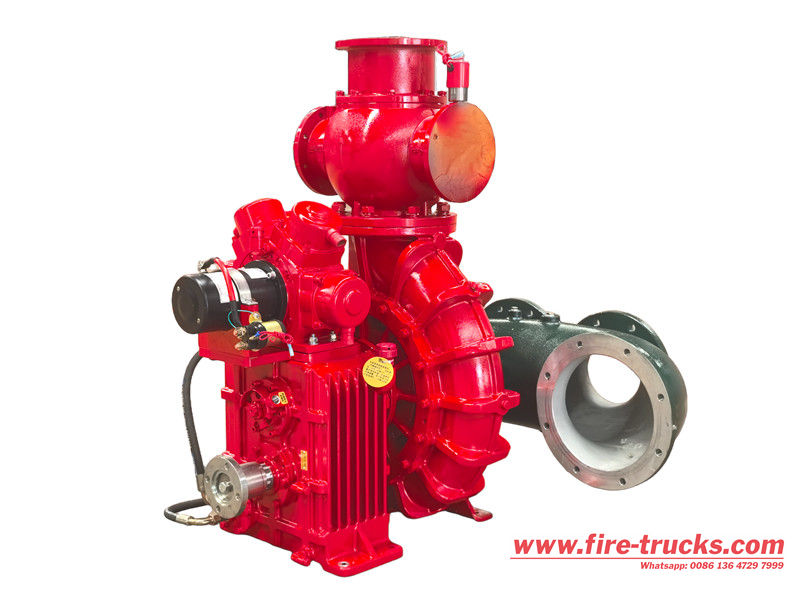
CB10/140泡沫消防泵是一款常用的车载或固定式消防供水系统,额定压力为1.0 MPa,额定流量为140 L/s,满足消防系统的核心供水需求。泵体和叶轮均采用优质耐磨材料制成,具有耐腐蚀性和耐高压性。 它采用双进水口设计,可快速切换水源,并由高效电机或柴油发动机驱动,启动响应时间不超过30秒。凭借其紧凑的设计、易于维护和可靠的运行, CB10/140泡沫消防泵 是确保消防行动高效供水的重要设备。 CB10/140-XZ型低压车载消防泵采用单级离心式结构,泵壳为铝合金材质,叶轮为黄铜材质。它采用带电控开关的四活塞电动引水系统。可选配的CB10/20型泡沫泵则采用气动分离机构。该产品性能优异、结构紧凑、操作简便、维护方便。 CB10/140-XZ型消防泵是一款用于消防车的单级离心水泵,其特点是采用双活塞自动接合和脱离的引水装置。该泵结构紧凑、操作简便、维护方便,并具有高性能的特点。主要规格包括:额定转速为2600转/分时,流量为140升/秒,出口压力为1.0兆帕。 » 。 CB10/140泡沫消防泵的工作原理 ● 水和泡沫浓缩液摄入量: 水从供水系统抽取,泡沫浓缩液从其储罐抽取。 ● 比例: 比例混合器将泡沫浓缩液与水按预定比例混合。 ● 加压: 泵对混合物加压,提高其流速和压力。 ● 释放: 加压泡沫溶液通过输送软管被推至喷嘴,然后喷射到火源上。 ● 灭火: 泡沫覆盖住燃料源,使其与氧气隔绝,从而扑灭火焰。 » 。 CB10/140泡沫消防泵详细介绍 1. 优异的结构设计,稳定可靠的性能: ● 这 CB10/140 消防泵 采用单级离心式设计,由高强度铝合金制成,具有重量轻、耐腐蚀、耐高温等优点。 ● 泵的内部结构经过精密加工,确保水流平稳,水力性能优异。机械密封可防止泄漏,保证长期运行可靠性。 ● 这款消防泵具有强大的吸力和排力,适用于各种中大型消防车和应急消防设备。 2. 操作简便,适应性强: ♦ CB10/140泡沫消防泵可通过动力输出装置(PTO)直接连接到发动机,从而实现灵活的启动和停止操作以及快速响应。 ♦ 它具有优异的自吸性能,能够快速完成注水作业,并适应各种水源,包括河流、池塘和地下水。 ♦ 该用户友好型控制系统操作简单可靠,即使在紧急情况下也能快速部署,显著提高消防效率。 3. 易于维护且安全性高: ➤ CB10/140泡沫消防泵的设计充分考虑了易用性和维护性。检修口位于关键位置,方便日常维护和部件更换。 ➤ 泵体和密封件均采用耐磨材料制成,延长了设备的使用寿命。该系统配备安全泄压装置,可在过压情况下自动调节压力,防止设备损坏。 ➤ 它运行平稳、噪音低、经久耐用,是各种消防车式å
细节
请继续阅读,保持关注,订阅,并欢迎您告诉我们您的想法。


 中文
中文 English
 français
 Deutsch
 русский
 italiano
 español
 português
 Nederlands
 العربية
 日本語
日本語 한국의
한국의 Türkçe
 Melayu
 ไทย
ไทย Tiếng Việt
 Indonesia
  қазақ
қазақ Filipino
 မြန်မာ
 српски

 支持IPv6网络