
 中文
中文 English
 français
 Deutsch
 русский
 italiano
 español
 português
 Nederlands
 العربية
 日本語
日本語 한국의
한국의 Türkçe
 Melayu
 ไทย
ไทย Tiếng Việt
 Indonesia
  қазақ
қазақ Filipino
 မြန်မာ
 српски


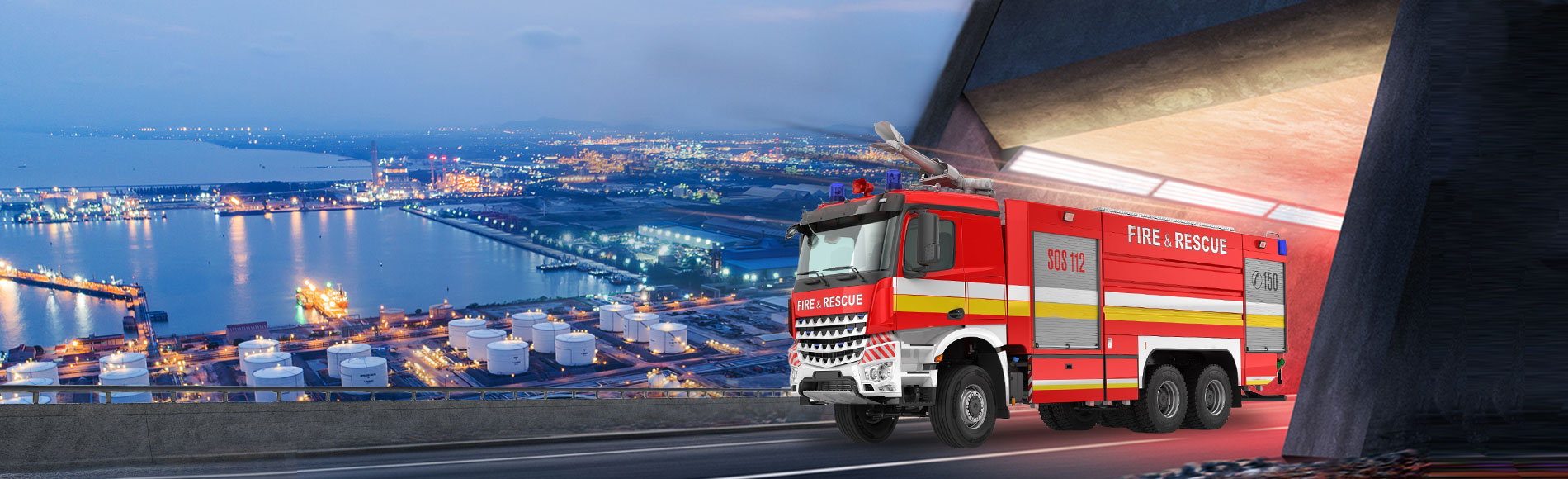
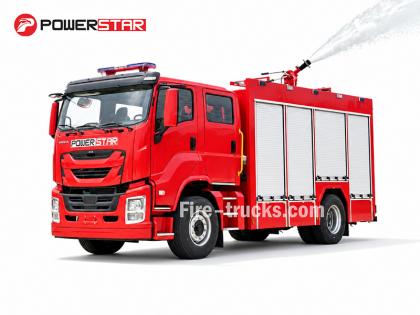
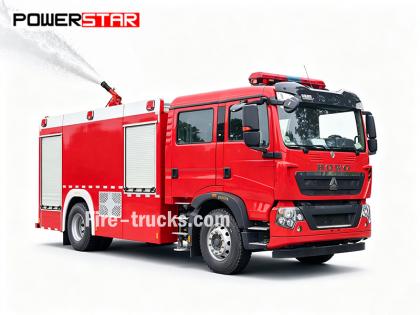
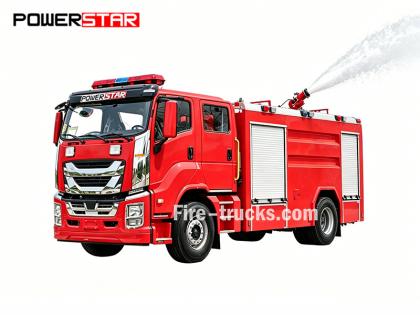
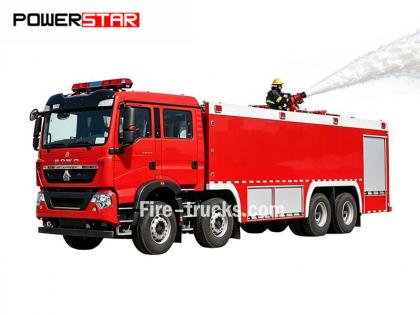
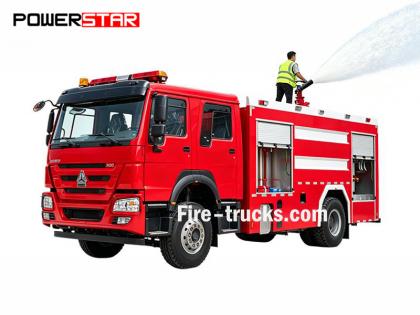
The fire truck water plumbing system is the core of every firefighting operation. It precisely directs water from the tank or an external source through the pump, valves, and piping to deliver high-pressure water or foam to the fire scene — whether it is a high-rise building fire in a dense city center or a petrochemical storage tank fire in an industrial zone. The fire truck water plumbing system consists of multiple components working together.: fire pump, water tank, suction hose, discharge piping, valves, dividing breaching, collecting breaching, strainer, fire monitor, hose couplings, and more. Water stored in the tank must pass through these components before it can reach the fire. The complete flow path is:
Water Tank → Suction Hose → Strainer → Fire Pump → Pressure Regulation System → Discharge Manifold → Valves → Dividing Breaching → Fire Monitor / Hose Couplings → Nozzle
This article explains each component of the water plumbing system and how they work together to deliver water at the right pressure and flow.
I. Core Components of the Water Plumbing System
1. Water Tank: Stores onboard water (typically 2,000–12,000 liters) and delivers it to the pump through intake piping. Equipped with anti-slosh baffles, strainer to filter debris, and a priming system for drafting from natural water sources.
2. Fire Pump: The heart of the system. A centrifugal pump driven by the truck engine through PTO. Common pressure grades: 0.8 MPa, 1.0 MPa, 1.2 MPa, 1.4 MPa. Flow rates from 1,200 to 6,000 L/min.
3. Valves and Piping: A network of pipes and valves that controls the direction and volume of water flow.
-
Intake valve: Connects the pump to external water sources (hydrant or drafting point)
-
Tank-to-pump valve: Allows the pump to draw water directly from the onboard tank
-
Discharge valves: Control water flow to hoses and nozzles
II. How the Fire Truck Water Plumbing System Works
Step 1: Water Intake and Priming
Water enters the system from the onboard tank, fire hydrant, or natural water sources (lakes, rivers, ponds). When drafting from natural sources, the priming system (vacuum pump) removes air from the suction hose, creating a vacuum that allows atmospheric pressure to push water into the pump. A strainer filters debris to protect the pump, and a check valve prevents backflow.
Step 2: Pump Pressurization
The centrifugal pump is driven by the truck engine through a power take-off (PTO). Once water fills the pump, the impeller spins at high speed (1,500–2,500 RPM). Centrifugal force throws water outward, increasing its velocity. The pump casing converts this velocity into pressure (typically 0.8–1.2 MPa). An electronic pressure governor automatically maintains the set pressure, while a relief valve prevents over-pressurization.
Step 3: Discharge and Distribution
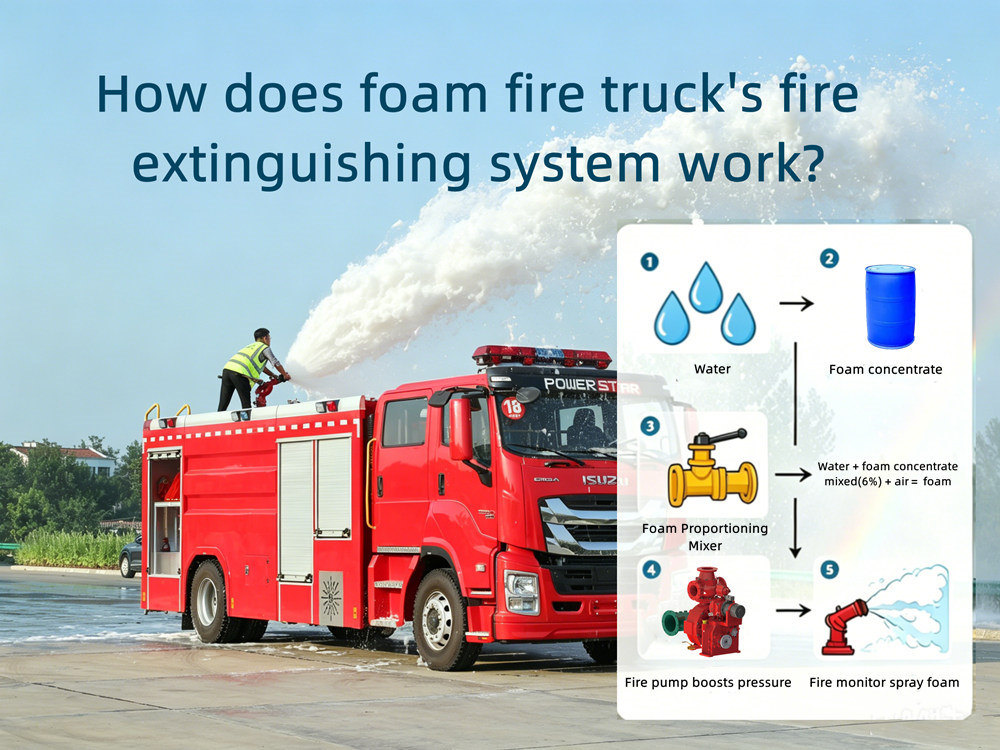
Pressurized water flows from the pump through the discharge manifold, which distributes water to multiple outlets. Valves control the flow to each outlet. A dividing breaching splits water flow into multiple hose lines, allowing several firefighters to attack the fire simultaneously. A collecting breaching combines water from multiple supply lines when additional flow is needed. Water is delivered through fire monitors (high-volume remote firefighting), handlines (direct attack), and high-pressure reels (localized fires).
III. Complete Fire Truck Water Plumbing System
1. Intake System (Water Supply and Filtration)
| Component | Material / Process | Function |
|---|---|---|
| Suction hose | Rigid, non-collapsible | Resists vacuum pressure during drafting |
| Strainer | Stainless steel mesh | Filters debris from incoming water |
| Priming system | Rotary vane or piston vacuum pump | Removes air from suction hose before drafting |
| Check valve | Brass or stainless steel | Prevents water backflow |
2. Pump System (Pressure Generation)
-
Fire pump: Single-stage or two-stage centrifugal pump. Flow rates from 1,200 to 6,000 L/min. Pressure up to 2.5 MPa. Driven by PTO from the truck engine.
-
Pressure governor: Electronic control system that automatically maintains set discharge pressure regardless of flow changes.
-
Relief valve: Mechanical safety valve that opens when pressure exceeds the set limit, bypassing excess water back to the tank.
3. Discharge System (Water Delivery)
-
Discharge manifold: Distributes pressurized water to multiple outlets (DN65, DN80, DN100).
-
Valves: Ball valves or butterfly valves control water flow to each outlet.
-
Dividing breaching: Splits one water flow into two or more streams for multiple hose lines.
-
Collecting breaching: Combines water from multiple supply lines into one stream.
-
Fire monitor: Roof-mounted or turntable-mounted, 360° rotation, -30° to 80° vertical tilt, water range up to 70 meters.
-
Hose couplings: Standard Storz or threaded couplings for quick and secure hose connections.
-
Fixed or portable nozzles: Suitable for different firefighting scenarios.
IV. Summary of Fire Truck Piping Functions
| Pipe Name | English | Function |
|---|---|---|
| Suction Hose | Suction Hose | Water intake |
| Discharge Pipe | Discharge Pipe | Delivers high-pressure water |
| Foam Line | Foam Line | Delivers foam concentrate |
| Recirculation Line | Recirculation Line | Prevents pump overheating |
| Drain Line | Drain Line | Drains the system |
| Test Line | Test Line | Pressure testing |
V. Common Issues and Solutions
| Issue | Possible Cause | Solution |
|---|---|---|
| Pump won't prime | Air leak in suction hose | Check and tighten all suction connections |
| Low water pressure | Clogged strainer, worn impeller | Clean strainer; inspect impeller |
| Water leakage | Worn seals or gaskets | Replace seals and gaskets |
| Pressure fluctuation | Air in system, governor malfunction | Re-prime; check pressure governor |
| No flow to outlet | Closed valve, blocked line | Check valves; clear blockage |
VI. Frequently Asked Questions
1. What is the main power source of a fire truck water plumbing system?
The core power comes from the vehicle engine, which drives the fire pump through a power take-off (PTO). Engine power is converted into pump operation, continuously providing suction vacuum and discharge pressure to keep the system running.
2. Can a fire truck water system directly use water from rivers or lakes?
Yes. The strainer at the end of the suction hose filters most debris for standard drafting operations. However, heavily turbid water is not recommended, as it can accelerate pump wear and cause pipe blockages, affecting equipment service life.
3. What are the functions of the dividing breaching and collecting breaching?
The dividing breaching splits a single water flow into multiple streams, enabling simultaneous firefighting from multiple points. The collecting breaching combines water from multiple supply lines to increase intake flow, effectively enhancing the system's continuous operation capability.
4. What is the function of the strainer?
The strainer is installed at the suction inlet to filter debris such as sand, gravel, and leaves from incoming water. This protects the pump from damage and prevents clogging of nozzles and valves. Regular cleaning of the strainer is essential for maintaining optimal flow.
5. What is the function of the relief valve?
The relief valve is a mechanical safety device that opens when system pressure exceeds the set limit, bypassing excess water back to the tank or pump suction. This prevents hose bursts and pump damage.
VII. Conclusion
The fire truck water plumbing system is the lifeblood of every firefighting operation. From the tank through the pump, valves, dividing breaching, collecting breaching, fire monitor, hose couplings, and finally the nozzle — every component plays a critical role in delivering water where it is needed most. Understanding how the fire truck water plumbing system works not only provides insight into the professional equipment behind firefighting operations but also helps our customers select the right configuration for their specific fire protection needs.



 支持IPv6网络